Mortgage Payment Stress Test
A mortgage affordability check works best when it treats the monthly payment as a stress variable, not a fixed promise. The payment-to-income stress test compares your expected housing payment to your monthly take-home income, then repeats the comparison under plausible changes such as a higher interest rate, higher taxes, or a temporary income drop. This approach matters because many borrowers qualify using initial rates and assumptions that later change through escrow adjustments, insurance renewals, or rate resets on adjustable-rate mortgages.
For a practical example, take a household that expects a $2,400 principal-and-interest payment. If property taxes rise by $200 per month and homeowners insurance rises by $60 per month, the “real” payment for budgeting becomes $2,660 before any HOA fees. If the household also loses one income stream for six months, the payment-to-income ratio can jump sharply even when the loan terms remain unchanged. The stress test forces you to see those jumps while you still have choices.
Use the test for both new purchases and refinancing. A refinance can reduce the interest rate, but it can also extend the term, change escrow amounts, or add cash-out costs. A stress test catches those tradeoffs early, when you can still adjust the down payment, loan amount, or loan type.
Common Affordability Mistakes
Many people focus on the lender’s qualification ratio and stop there. Lenders often use debt-to-income (DTI) rules that include other debts and may rely on conservative or standardized assumptions, but those rules do not automatically reflect your personal cash-flow reality. A payment-to-income stress test uses your actual take-home pay and your likely housing cost path, which can differ from underwriting inputs.
Another frequent mistake comes from treating escrow as “set and forget.” Escrow payments can change after reassessment, insurance renewal, or local tax updates. Even with a stable mortgage rate, the total monthly payment can move because escrow is recalculated periodically. If you budget only for principal and interest, you can end up short when the escrow statement arrives.
People also underestimate how income volatility interacts with housing costs. A household with variable income, commission, overtime, or self-employment can see take-home pay swing month to month. When the mortgage payment stays fixed, the ratio worsens during low-income months. The stress test should model a realistic income drop, not a worst-case headline.
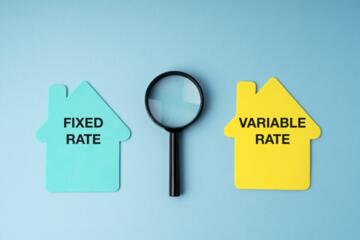
Loan structure matters too. Adjustable-rate mortgages (ARMs) can reset after an initial fixed period, and the reset rate depends on an index plus a margin. Even when the payment cap limits how much the rate can rise at each adjustment, the payment can still increase enough to change your affordability. Fixed-rate loans avoid reset risk but still face tax and insurance changes.
Supporting technologies and dependencies shape what you can calculate. Most affordability tools rely on inputs like credit score, loan term, interest rate, property tax estimates, and insurance quotes. Online calculators often use generic tax and insurance assumptions, and they rarely model your specific HOA contract terms. If you use a tool, check whether it separates principal-and-interest from escrow and whether it lets you enter a tax and insurance range.
How To Run The Stress Test
Step 1: Build Your Baseline
Start with your monthly take-home income, not gross pay. Use the most recent pay stubs or a consistent average for variable income. Then estimate the full monthly housing payment: principal and interest plus property taxes plus homeowners insurance plus HOA dues, if any. If you have an escrowed mortgage, separate the escrow components so you can stress them later.
As a side observation, many people enter only the lender’s “estimated monthly payment” and forget that it may assume a particular tax rate and insurance premium. If you want a tighter baseline, request a homeowners insurance quote and use recent local tax records or your county assessor website. In one spreadsheet I reviewed (Excel 365, version 2408), the biggest difference came from insurance assumptions, not the interest rate.
Step 2: Stress Housing Costs
Run at least two housing-cost scenarios. One scenario uses your baseline taxes and insurance; the other uses higher values that reflect plausible renewal and reassessment outcomes. A common planning approach is to add a buffer for taxes and insurance rather than guessing a single number forever. For example, you can test taxes at baseline plus 10–20% and insurance at baseline plus 10–25%, then adjust based on local volatility.
HOA fees deserve separate treatment because they can rise on a schedule set by the association. If you have HOA dues, check meeting minutes or the most recent budget summary. If you do not have access to those documents, model a modest increase and treat it as a sensitivity rather than a prediction.
Step 3: Stress Income
Model a temporary income drop that matches your employment situation. For salaried workers, a short job loss scenario might be too extreme for a routine plan, but a reduction in hours or a loss of bonus income can be realistic. For variable income, test a lower average take-home pay for several months. The goal is not to predict your future; it is to see whether the payment-to-income ratio stays within a range you can tolerate.
Pick a time window that matches your household’s buffers. If you have emergency savings, you might plan for a 3–6 month income dip. If savings are limited, you may need a stricter ratio or a smaller loan amount. People often skip this step because it feels uncomfortable, and then the first real dip becomes a budgeting shock.
Step 4: Choose A Safety Threshold
There is no single legal or universal “safe” payment-to-income number, but you can use a practical threshold tied to cash-flow. A common planning target is keeping the stressed housing payment at or below about 30–35% of take-home income for households with stable employment, and lower for households with higher fixed obligations or limited savings. If your other monthly debts already consume a large share of take-home pay, the housing payment threshold should tighten.
Use the stress test to compare options. If the stressed ratio exceeds your threshold, you can reduce the loan amount (bigger down payment), choose a longer term only if it reduces the payment enough to meet your threshold, or adjust the loan type to reduce payment volatility. Be cautious with “payment-only” decisions because extending the term can increase total interest paid even when monthly affordability improves.
Case Examples For Real Planning
Example 1: Fixed-Rate Purchase With Escrow Changes
A couple plans to buy a home with a fixed-rate loan. Their baseline principal-and-interest payment is $2,150. They estimate property taxes at $320 per month and insurance at $95 per month, with no HOA. Their take-home income averages $7,000 per month, so the baseline housing payment is $2,565, which is about 36.6% of take-home pay.
They run a stress scenario using taxes +15% and insurance +20%, raising taxes to $368 and insurance to $114. The stressed housing payment becomes $2,632.5, or about 37.6% of take-home pay. The ratio barely changes, which tells them the main affordability driver is the loan payment itself rather than escrow volatility. They decide to increase the down payment to lower the loan amount and reduce the principal-and-interest payment by $150, which brings the stressed ratio closer to their target.
Example 2: ARM Reset Risk And Income Variability
A single borrower considers a 5/1 ARM, where the rate is fixed for five years and then resets annually. Their baseline principal-and-interest payment at the initial rate is $2,050. They estimate taxes at $280 and insurance at $110, plus an HOA of $60, for a baseline housing payment of $2,500. Their take-home income averages $6,200, but commission income can drop, so they model a 15% income reduction for six months.
In the stress scenario, take-home income becomes $5,270. They also model a higher interest rate at reset by using a rate increase assumption consistent with the loan’s index behavior and margin, then recompute principal-and-interest. If the payment rises by $250 at reset, the stressed housing payment becomes $2,750. The payment-to-income ratio becomes about 52.2% during the low-income months, which exceeds their comfort range. They choose a fixed-rate loan instead, even though the initial payment is higher, because the stress test shows the reset risk dominates their affordability.
Stress Test Checklist And Table
Use this checklist to keep the stress test grounded in inputs you can verify. If you cannot verify an input, treat it as a range and test the range endpoints.
| Item | Baseline Input | Stress Input | What It Reveals |
|---|---|---|---|
| Take-home income | Average monthly net pay | -10% to -20% for 3–6 months | How income dips change the ratio |
| Principal & interest | Initial rate payment | Higher rate payment for ARM reset | Payment volatility risk |
| Property taxes | Current assessed estimate | +10% to +20% buffer | Escrow sensitivity |
| Insurance | Current quote or renewal premium | +10% to +25% buffer | Renewal shock risk |
| HOA dues | Current monthly amount | Model a modest increase | Budget drift over time |
- Write down your take-home income and the source (pay stubs, tax return averages, or a recent bank statement average).
- List every housing-cost component that hits your monthly budget, not only principal and interest.
- Choose stress ranges for taxes and insurance based on local patterns or your own quotes.
- For ARMs, model a reset payment using the loan’s index behavior and margin, then test the low-income scenario.
- Compute the stressed payment-to-income ratio and compare it to your household’s tolerance tied to savings and other debts.
- Adjust one lever at a time (down payment, loan amount, loan type) so you can see which change actually fixes the ratio.
Common Mistakes That Skew Results
One mistake is mixing gross income with net income. If you use gross pay in the numerator or denominator, the ratio becomes misleading because taxes and deductions vary by household. Another mistake is using a single month of income for variable earners. A three-month average often gives a more stable baseline, and it reduces the chance you plan around a temporary high month.
People also forget to include recurring housing costs that do not appear in the loan payment line. HOA dues, flood insurance where applicable, and mortgage insurance premiums (for certain down payment levels) can change the monthly total. Mortgage insurance premiums depend on loan-to-value and program rules, and they can end at a certain point for some borrowers, but they do not disappear automatically for everyone.
Another error comes from assuming the lender’s estimate matches your final escrow. Lenders provide estimates, and escrow can change after closing when the servicer sets up the account. If you want a reality check, ask for the lender’s escrow estimate breakdown and compare it with your own tax and insurance quotes.
Finally, some borrowers treat the stress test as a one-time hurdle. A payment-to-income ratio can worsen after a job change, a rate reset, or a tax reassessment. Re-running the test annually or after major life events keeps the plan aligned with actual conditions, even when the loan terms stay the same.
FAQ
What Is A Payment-To-Income Test?
It compares your monthly housing payment to your monthly take-home income, then repeats the comparison under higher-cost and lower-income scenarios to see whether you can handle payment changes.
Which Income Number Should I Use?
Use net take-home pay. For variable income, use an average over several months so the baseline does not reflect a temporary high or low.
How Do I Stress Property Taxes And Insurance?
Use a buffer range based on local reassessment and renewal patterns, then recompute the total monthly payment. If you have quotes, stress around the quoted premium rather than using a generic estimate.
How Do ARMs Affect The Stress Test?
ARMs can raise principal-and-interest payments at reset. Model a higher reset payment using the loan’s index and margin behavior, then compare the stressed payment to a lower-income scenario.
What Ratio Should I Target?
There is no single universal number. Many households plan for stressed housing costs around 30–35% of take-home pay for stable jobs, and lower when savings are thin or other debts are high.
Author's Insight
A payment-to-income stress test is less about finding a perfect threshold and more about exposing the assumptions that usually hide in lender estimates. Escrow changes, HOA adjustments, and income variability often drive affordability outcomes more than the initial interest rate. When you build the test from your own net income and your own tax and insurance inputs, the results become actionable rather than theoretical. If you want a practical starting point, run two scenarios: one with higher housing costs and one with lower income, then adjust the loan amount until the stressed ratio matches your household’s tolerance.
Key Takeaways
- Budget for the full monthly housing payment, including escrow components and HOA dues, not only principal and interest.
- Stress both sides of the ratio: housing costs (taxes, insurance, HOA) and income (temporary drops or variable earnings).
- Use a take-home income baseline and compute the stressed payment-to-income ratio under realistic scenarios.
- For ARMs, model reset risk; for fixed-rate loans, focus on escrow drift and insurance renewal changes.
- Re-run the stress test after major life events or when escrow statements change, since affordability depends on current conditions.